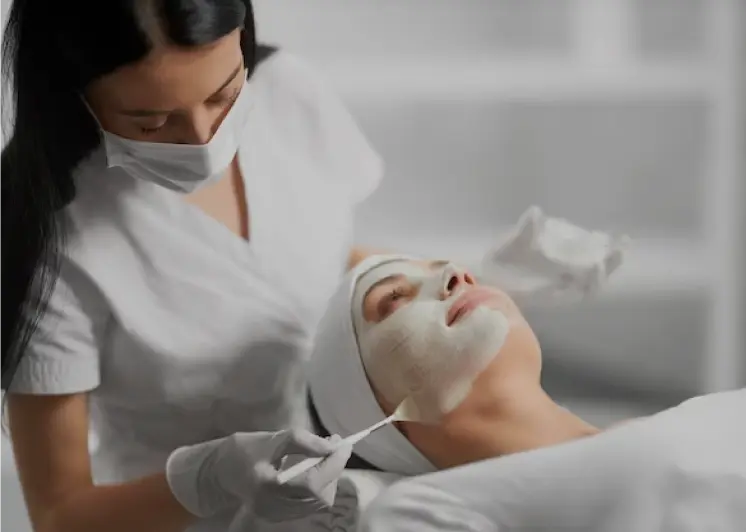
Platelet-rich plasma Gdańsk – Prof. Jacek Zieliński Medical Centre - natural skin regeneration.
Platelet-rich plasma (PRP) is an innovative method used in aesthetic medicine that harnesses the body's natural regenerative properties. The procedure involves administering platelet-rich plasma derived from the patient's own blood, thereby stimulating the natural processes of skin and hair follicle rebuilding.
Platelet-rich plasma therapy is particularly recommended for people struggling with, for example, excessive hair loss, weakened hair follicles, and loss of skin firmness. Thanks to its high content of platelets and growth factors, the treatment intensely stimulates regenerative processes and collagen production.
Platelet-rich plasma – procedure steps
During a procedure at our Medical Centre, we first take a sample of the patient's blood, which is then subjected to a special centrifugation process. During this process, platelet-rich plasma, containing a high concentration of platelets and growth factors, is separated.
The obtained platelet-rich plasma is injected into the skin or scalp using a fine needle. The procedure is performed under local anaesthesia, making it a more comfortable treatment for the patient.
The introduction of platelet-rich plasma into the skin stimulates skin cells, promotes the formation of new blood vessels, and activates regenerative processes responsible for tissue repair.
For maximum results, a series of several treatments usually needs to be carried out at intervals of 1-2 weeks.
Platelet-rich plasma for hair
Platelet-rich plasma for hair is one of the most effective methods used in treating hair loss.
Therapy helps people struggling with, among other things:
- excessive hair loss;
- Androgenetic alopecia;
- Alopecia areata;
- with weakened hair follicles;
- worsened hair condition
Administering stem cells into the scalp stimulates hair follicles, improves blood circulation, regenerates the scalp, and provides growth factors contained in the patient's blood platelets.
This results in:
- Hair loss inhibition;
- Strengthening hair follicles;
- Stimulating the growth of new hair;
- Improving hair condition and density.
VAMPIRE FACELIFT – platelet-rich plasma for the skin
The treatment using platelet-rich plasma, often referred to as a vampire facelift, is also used to improve skin quality.
Injection of platelet-rich plasma into the skin causes:
- Intensive skin regeneration;
- Stimulation of collagen production;
- Improved skin firmness and elasticity;
- Reduces the signs of ageing.
Thanks to the content of growth factors, the skin becomes firmer, and the treatment guarantees natural and long-lasting results.
The PRP procedure at our Medical Centre
The platelet-rich plasma treatment proceeds in several stages:
- Taking a small sample of the patient's blood;
- The process of centrifuging blood in a special centrifuge;
- The centrifuge separates the patient's platelets
- Separation of plasma and administration of the preparation into the skin or scalp.;
The entire procedure usually takes about 30-45 minutes.
The effects of platelet-rich plasma therapy
Regular application of platelet-rich plasma therapy allows for visible results:
- halts hair loss;
- stimulates new hair growth;
- improves hair condition;
- increases skin elasticity;
- It stimulates natural regenerative processes.
Treating hair loss with PRP promotes hair regrowth and inhibits hair loss. The first visible effects usually appear after a few weeks, and the full/final results are visible after a series of treatments, which are arranged individually with a specialist.
Platelet-rich plasma stimulates the growth of new hair and improves its overall condition, making hair stronger and shinier. A series of several PRP treatments, performed every few weeks, is recommended to achieve optimal results.
Contraindications for PRP treatment
Platelet-rich plasma is a biocompatible preparation, which means that its use does not carry any risk of intolerance. Although platelet-rich plasma is derived from the patient’s own blood, there are certain contraindications to the procedure:
- Purulent changes;
- Active infection
- Blood disorders;
- contraindications: pregnancy;
- active herpes;
- autoimmune diseases.
Before the procedure, a detailed patient diagnosis is always carried out